
Using airis:ident as a Service for a Great People Check.
How AI-powered identity verification can help businesses build trust, improve onboarding, reduce identity-related risks, and create a more efficient people-check process.
In an increasingly digital business environment, knowing who you are dealing with has become more important than ever. Companies work with customers, employees, freelancers, business partners, suppliers, marketplace users, and service providers across geographical borders. At the same time, digital identities are becoming easier to create, modify, and misuse.
For businesses, this creates a fundamental challenge: How can an organization establish greater confidence that a person is who they claim to be?
Traditional verification processes can be slow, fragmented, and dependent on manual document checks. Digital transformation has created an opportunity to improve these processes through automated identity verification technologies.
This is where airis:ident as a service can become an interesting approach for organizations looking to establish an efficient and scalable people-check process.
By integrating identity verification capabilities into existing digital workflows, businesses can potentially verify identity information earlier, streamline onboarding, and create additional layers of trust without unnecessarily complicating the user experience.
What Is a People Check?
A people check is a process designed to establish confidence in a person’s identity and, depending on the lawful purpose and applicable regulations, potentially verify additional information relevant to a business relationship.
The exact scope of a people check depends on the organization and its use case.
For one company, it may simply mean confirming that a customer is a real person and that their identity document appears valid. For another organization, it may involve identity verification as part of customer onboarding, Know Your Customer processes, workforce onboarding, marketplace verification, or fraud prevention.
A modern people-check process can therefore include different components, such as:
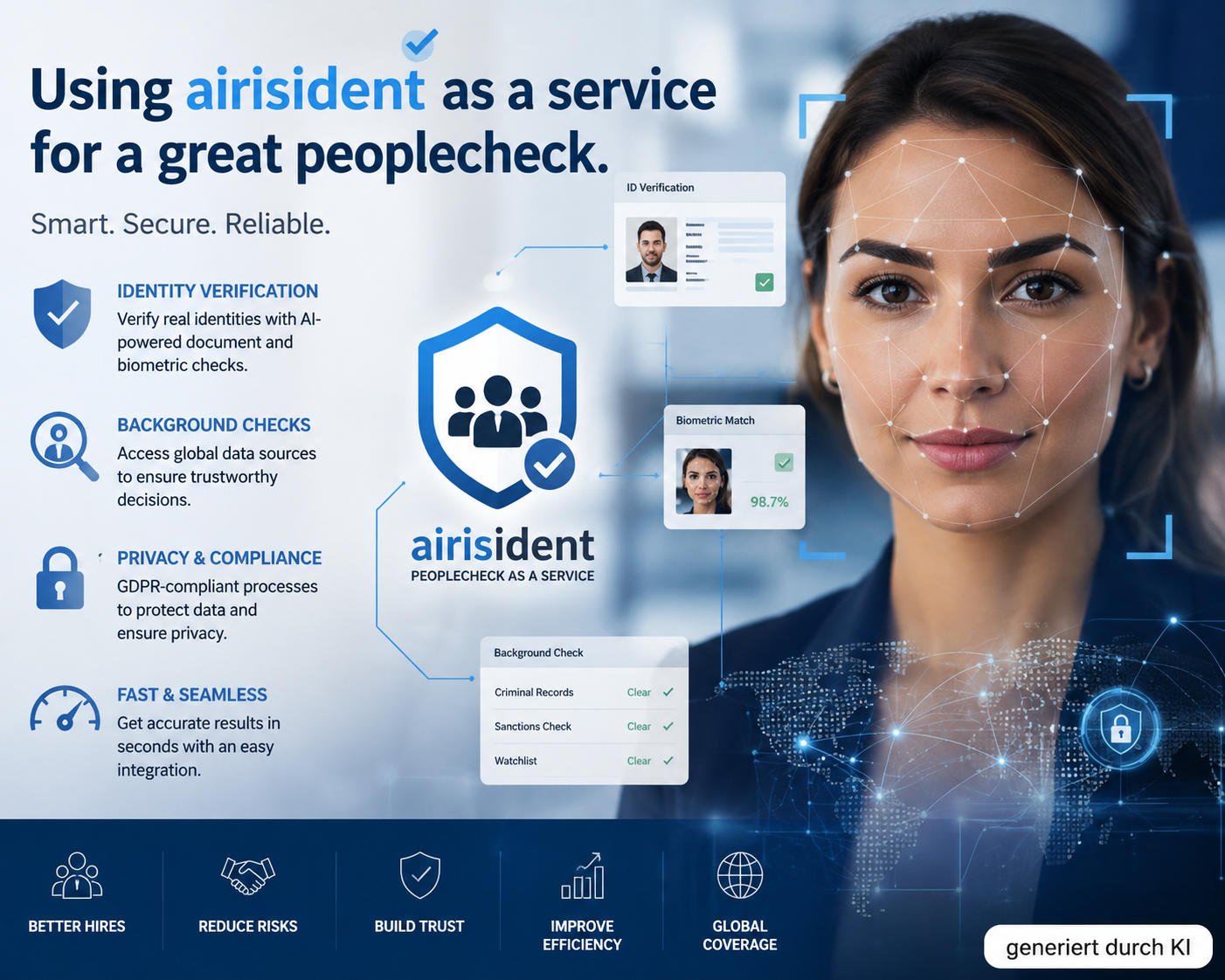
- Identity document verification
- Facial or biometric comparison where legally appropriate
- Liveness or presentation-attack detection
- Personal information consistency checks
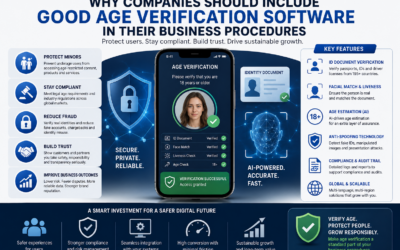
- Age verification
- Customer onboarding verification
- KYC-related processes
- Risk-based review
- Manual escalation for uncertain cases
The important principle is that verification should be appropriate to the specific business purpose.
Why Businesses Need Better People Checks
Digital business models have changed the traditional relationship between companies and their customers.
A customer may never visit a physical branch. A freelancer may work for an organization without ever meeting its employees. A marketplace seller may operate from another country. A financial or digital service may onboard thousands of customers without face-to-face interaction.
This creates convenience, but it can also create opportunities for identity fraud and account misuse.
Fraudsters may attempt to use stolen identity documents, manipulated documents, synthetic identities, impersonation, or other techniques to bypass onboarding procedures.
For businesses, inadequate verification can result in financial losses, reputational damage, regulatory problems, operational costs, and reduced customer trust.
A strong people-check process can therefore become an important part of a broader Trust & Safety strategy.
Airis:ident as a Service: A Flexible Approach
The concept of airis:ident as a service focuses on making identity verification available as an integrated digital capability rather than requiring organizations to build every component themselves. Similar with image & video moderation using airis:protect in addition.
For businesses, this service-based model can offer several potential advantages.
Instead of developing document analysis, identity verification workflows, image processing, and verification interfaces internally, organizations can integrate identity-check capabilities into their existing processes.
This can be particularly useful for companies that want to improve verification without building a complete identity infrastructure from scratch.
A service-oriented identity verification approach can also support scalability.
When a company grows from hundreds of users to thousands or potentially millions of verification events, the underlying verification process needs to be capable of supporting increased demand.
The Importance of Identity Verification
Identity verification is one of the fundamental components of a modern people-check process.
At its simplest, identity verification answers a basic question:
- Does the information provided by a person correspond to a legitimate identity document and the person presenting it?
Modern digital verification can analyze documents and compare relevant information with other verification signals. This can make the onboarding process more systematic and potentially reduce the dependence on manual visual inspection.
However, automated verification should not be viewed as a guarantee of identity or as an infallible fraud detector. Instead, it should be treated as one component within an appropriately designed verification and risk-management process.
AI-Powered Document Verification
Identity documents can contain complex visual and machine-readable elements.
Depending on the document type and jurisdiction, these may include photographs, document numbers, dates, security elements, machine-readable zones, barcodes, and other information.
AI-powered document analysis can help organizations evaluate submitted documents more efficiently.
A digital workflow may analyze an uploaded identity document, extract relevant information, evaluate document characteristics, and identify cases that require additional review.
For organizations processing large numbers of users, automation can significantly reduce repetitive manual work.
This is one of the areas where airis:ident as a service can potentially provide value: integrating automated identity-document analysis into a broader digital onboarding process.
Connecting the Document to the Person
Document verification alone does not necessarily establish that the person presenting the document is its legitimate owner.
This is why modern identity verification processes can combine document checks with additional identity signals.
One example is biometric comparison.
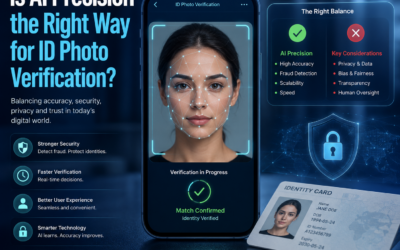
Where legally appropriate and properly implemented, a system can compare a person’s facial image with the photograph contained in an identity document.
The objective is to determine whether the submitted identity document and the person undergoing verification appear to correspond. This additional layer can make a people-check process more robust than relying exclusively on a document upload.
The Role of Liveness and Presentation-Attack Detection
Digital identity verification also needs to consider attempts to manipulate the verification process.
For example, a malicious user could potentially attempt to present a photograph, video, screen image, or other representation instead of interacting with the verification system as a genuine person.
Technologies designed to detect presentation attacks or evaluate liveness can provide an additional security layer.
The exact implementation and reliability depend on the technology, operating environment, and verification workflow.
For organizations considering airis:ident as a service, these capabilities can be evaluated as part of the overall identity-verification architecture rather than treated as an isolated feature.
Improving the Customer Onboarding Experience
Security and convenience are sometimes presented as competing objectives.
However, a well-designed digital identity verification process can support both.
Customers increasingly expect digital services to be fast and intuitive. Long forms, repeated document requests, unclear instructions, and lengthy manual verification processes can result in abandoned onboarding journeys.
An integrated identity verification service can potentially reduce unnecessary friction.
A typical workflow might look like this:
Start verification → Submit identity document → Automated analysis → Identity comparison → Verification result → Continue onboarding
The exact process should be adapted to the organization’s legal requirements, risk profile, and user experience strategy. The goal should be to collect only the information necessary for the defined purpose while providing clear explanations to users.
People Checks for Marketplaces
Online marketplaces are an especially interesting application for people-check technology.
A marketplace may connect buyers and sellers who have never met.
Trust therefore becomes a core component of the platform’s value proposition.
Seller verification can potentially help platforms establish greater confidence in the identity of participants.
Depending on the marketplace and applicable regulations, verification can be combined with other safeguards such as:
- Account security
- Payment verification
- Content moderation
- Fraud detection
- Reputation systems
- Device and behavioral signals
- Transaction monitoring
- Identity verification
Using airis:ident as a service within such an ecosystem could help make identity verification part of the platform’s overall Trust & Safety architecture.
Supporting Workforce and Contractor Onboarding
People checks are not limited to customers.
Organizations increasingly work with contractors, freelancers, remote employees, temporary workers, and external service providers.
Digital onboarding can make it possible for people to begin working with organizations from almost anywhere. However, businesses may still need to verify identity information during onboarding.
An identity verification service can help organizations introduce a consistent verification workflow across different locations. This can be particularly valuable for organizations operating internationally, although verification procedures must always account for local laws, employment requirements, privacy regulations, and the specific purpose of the check.
KYC and Regulated Business Processes
Know Your Customer, commonly known as KYC, is another major area in which identity verification plays an important role.
Financial services, payment providers, digital asset platforms, and other regulated businesses may have specific customer-identification obligations.
A digital identity verification service can potentially support parts of these processes by helping businesses collect and evaluate identity information. However, technology should not be confused with compliance itself.
Using airis:ident as a service does not automatically make an organization compliant with every applicable regulation. Businesses remain responsible for determining which legal requirements apply to their operations and for implementing appropriate policies, controls, monitoring, and governance.
The technology should therefore be considered an enabling component within a broader compliance framework.
Privacy Should Be at the Center
Identity verification involves sensitive personal information.
Organizations implementing a people-check solution should therefore pay close attention to privacy, security, transparency, data minimization, retention periods, access controls, and applicable data-protection requirements.
This is particularly important when biometric information or identity documents are involved.
Businesses should clearly define:
- What information is collected
- Why the information is required
- How verification results are used
- How long information is retained
- Who can access the information
- How users can exercise applicable rights
- When human review is required
A trustworthy people-check process should not simply focus on detecting fraud. It should also protect legitimate users.
Reducing Manual Verification Work
Manual verification remains valuable, particularly for complex or uncertain cases.
However, asking employees to manually inspect every identity document can become inefficient as a business grows. Automation can help by handling straightforward cases and directing exceptions toward trained reviewers.
This creates a practical human-in-the-loop approach.
For example:
- Low-risk / clear result → automated workflow
- Uncertain result → additional verification
- Potentially problematic case → human review
This model can help organizations balance efficiency and control.
Better Risk Management Through Layered Verification
A modern people check should rarely depend on one signal.
A document can appear valid while being presented by the wrong person. A face can belong to a real person while the associated identity information is misleading. A name can match an existing record without proving that the individual is actually the account owner.
For this reason, organizations can benefit from layered verification.
Possible layers include:
- Document verification
- Identity information validation
- Biometric comparison where appropriate
- Liveness or presentation-attack detection
- Risk assessment
- Manual review where required
The precise combination depends on the use case.
This layered model allows businesses to adapt verification intensity to their risk environment rather than applying the same process to every user.
Scaling Identity Verification With a Service Model
One of the biggest benefits of a service-based approach is scalability.
A growing company may experience substantial changes in verification volume.
During a product launch, promotional campaign, seasonal period, or geographic expansion, the number of users requiring verification can increase rapidly.
Building an internal identity verification infrastructure capable of handling every potential peak can be expensive and complex. A service-based architecture can provide a more flexible alternative by allowing identity verification capabilities to be integrated into existing applications and workflows.
For businesses, this can potentially reduce development requirements and accelerate implementation.
API Integration and Digital Workflows
Modern businesses increasingly rely on APIs to connect different software systems.
Identity verification can be integrated into customer registration, account activation, marketplace onboarding, workforce systems, or other digital processes.
The exact technical architecture depends on the provider and implementation, but the general principle is straightforward:
Identity verification becomes part of the existing business workflow instead of operating as a completely separate manual process.
This can help create a more consistent user journey.
Creating Greater Trust in Digital Business
Trust has become a strategic business asset.
Customers want to know that the people and organizations they interact with online are genuine. Platforms want to reduce fraudulent accounts. Companies want to establish reliable business relationships.
Identity verification cannot solve every trust problem, but it can provide an important foundation.
Using airis:ident as a service for a great people check can therefore be understood as part of a broader strategy for creating trusted digital interactions.
The objective is not simply to verify documents.
It is to create a more reliable connection between people, identities, accounts, and digital services.
Choosing the Right People-Check Strategy
Before implementing an identity verification service, organizations should define their specific requirements.
Important questions include:
What exactly needs to be verified?
Is the objective customer onboarding, age verification, KYC, workforce verification, marketplace seller verification, fraud prevention, or another purpose?
What level of assurance is required?
Not every business needs the same verification depth.
What jurisdictions are involved?
Identity documents, regulations, privacy requirements, and verification expectations can vary significantly between countries.
How should uncertain cases be handled?
An effective workflow needs clear escalation procedures.
What data should be retained?
Organizations should establish appropriate retention and deletion policies.
How will the system integrate with existing applications?
The technical integration should support both security and usability.
Answering these questions before implementation can help companies select a verification approach that is proportionate to their actual requirements.
The Future of AI-Based People Checks
The identity verification market is likely to continue evolving as artificial intelligence becomes more capable.
Future systems may increasingly combine document intelligence, computer vision, biometric analysis, fraud detection, behavioral signals, and automated risk assessment.
At the same time, fraud techniques will evolve.
Synthetic identities, manipulated documents, deepfakes, and increasingly sophisticated impersonation methods could make digital identity verification more challenging.
This creates an ongoing technological competition between verification systems and fraud techniques.
Organizations therefore need solutions that can evolve rather than relying on static verification processes.
Why airis:ident as a Service Can Be Relevant
The central advantage of airis:ident as a service is the possibility of making sophisticated identity verification capabilities accessible through an integrated business process.
For organizations, this can mean less reliance on fragmented manual procedures and greater opportunities to automate repetitive verification activities.
The technology can potentially support:
- Digital identity verification
- Document checks
- Person-to-document comparison
- Biometric verification where appropriate
- Customer onboarding
- Marketplace verification
- KYC-related workflows
- Fraud-prevention strategies
- Trust & Safety programs
- Scalable verification processes
The most effective implementation, however, will always depend on the organization’s specific requirements and regulatory environment.
Conclusion: Building a Better People Check
Digital trust is becoming an increasingly important component of modern business.
As organizations move more customer relationships, workforce processes, marketplaces, and services online, they need practical ways to establish confidence in the identities of the people they interact with.
Using airis:ident as a service for a great people check provides a concept for integrating AI-supported identity verification into modern digital workflows. Additionally airis:protect would be a great benefit using for all other checks.
The value of such technology goes beyond simply checking an identity document. A well-designed people-check strategy can combine document analysis, person-to-document comparison, appropriate biometric technologies, risk-based controls, human review, privacy safeguards, and clear governance.
For businesses, this can contribute to more efficient onboarding, improved operational processes, stronger fraud-prevention capabilities, and greater digital trust.
At the same time, organizations should remember that identity verification technology is not a substitute for responsible governance. The best results come from combining technology with appropriate legal, security, privacy, and operational processes.
As digital interactions continue to replace traditional face-to-face relationships, the ability to establish trustworthy digital identities will become increasingly important.
airis:ident as a service can be positioned as one component of this evolving identity-verification landscape—helping organizations move toward faster, more scalable, and more structured people-check processes while keeping trust, privacy, and responsible verification at the center.